Tangen: Norges Bank's management of the Government Pension Fund Global
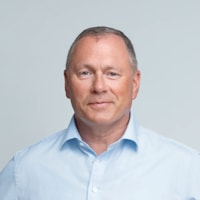
Chief Executive Officer of Norges Bank Investment Management, Nicolai Tangen. Opening statement at the hearing on the Government Pension Fund in the Storting’s Standing Committee on Finance and Economic Affairs, 5 May 2026.
Translated from Norwegian for information purposes only. Please note that the text below may differ from the actual address.
Thank you, Ida. Minister of Finance, members of the Storting (Parliament).
Last year, Norges Bank Investment Management concluded one strategic period and embarked on a new one. The strategy through to 2028 builds on the work done in the previous period and draws on our core strengths: a long-term investment horizon, the fund’s scale, our people, our culture, and – not least – technology and data. These strengths give us a competitive advantage in the market.
In my view, artificial intelligence is the most important development taking place in the world today. This technology is advancing faster than anything we have seen before. That is not merely my own assessment – it is the consistent message I hear from chief executives I meet around the world. They use the phrase ‘red alert’. I do not believe we in Norway have truly internalised what this means.
AI is affecting the fund in two distinct ways that are important to distinguish.
The first is our internal use of the technology. All 680 of our employees use AI daily. More than half use coding tools and write code themselves. Our most recent internal survey, in which employees report on their own usage, already shows that we have reached our target of a productivity gain of over 20 per cent.
This is not because we have replaced people with machines, but because our people are using AI as a tool and doing their jobs better. Portfolio managers analyse more data. Legal staff process cases more quickly. We meet more companies and make better decisions.
We are also using AI to reduce costs. Between 2023 and 2025, through a range of measures – of which AI is a significant component – we reduced trading costs for the fund by 30 per cent, equivalent to NOK 4.8 billion.
This is not something we started recently. We migrated to a cloud-based IT platform as long ago as 2018 and have spent years cleaning and structuring our data. That is what enables us to use AI in a responsible and effective manner.
AI does not, however, come without risks. Those who do not wish us well are also using this technology. We take that seriously and work continuously to strengthen our defences in cybersecurity and other areas of security risk. The pace of technological development makes this a race. We must constantly strive to stay one step ahead, and when we fall short, we must have procedures and processes in place to detect and resolve incidents swiftly.
The second way in which AI affects us is through our investments. Some ask who stands to benefit from AI. The answer is, among others, the fund. Over the past five years, we have earned NOK 1,614 billion from the seven largest technology companies in the United States.
Many have also raised questions about the valuations of technology companies and whether enthusiasm around AI has created bubble-like tendencies. I will not offer a view on that here, but in 2025, both strong corporate earnings and optimism around artificial intelligence – supported by solid growth in the US economy – contributed to the fund’s very strong returns.
I will not speculate on the future pricing of these companies, but it is a fact that rising market valuations of technology firms mean they account for an ever-larger share of our index.
At the end of 2025, the 10 largest companies – seven of them US technology firms – accounted for as much as 21.3 per cent of the fund’s equity investments. That is a concentration risk around a handful of companies the like of which we have never seen in the fund’s history. And it may continue to grow.
That brings me to the fund’s results. In 2025, the fund’s market value increased by 15 per cent, to more than NOK 21,000 billion at year-end.
2025 already feels like a long time ago. The results for the first quarter of this year showed a negative return of 1.9 per cent, while following the recovery in April the fund is up 4.2 per cent (as of 29 April), despite the highly turbulent situation in the Middle East.
The relative return – that is, the returns from investments that perform better or worse than the benchmark index against which we are measured – was negative in 2025 at −0.28 percentage points. Although the relative return has been positive over time – 24 basis points since the fund’s inception – this is the third consecutive year in which we have recorded a negative relative return. This is principally due to the weaker-than-market performance of our real estate investments.
Real estate is funded by selling equities and fixed income and is therefore measured relative to what we would otherwise have earned had we remained invested in those asset classes.
Over time, our real estate investments have not delivered the returns we seek. We are not satisfied with that. In 2025, we therefore chose to revise our strategy for these investments.
Whereas we previously concentrated our investments in a small number of selected cities, we will in future allocate based on sectors – such as offices, logistics and data centres. This will make the portfolio better positioned to navigate structural shifts in the real estate market, such as those we experienced during the Covid-19 pandemic and the growth of e-commerce.
I am confident that through these measures we will reverse the negative trend we have seen in recent years.
In 2019, we received a mandate to invest in unlisted renewable energy infrastructure. After making relatively few investments in the early years, when projects were generally very expensively priced, 2025 was a year of significant activity that tripled the capital we have committed.
We acquired stakes in two offshore wind projects in the North Sea off the coasts of Germany and Denmark, and we invested in TenneT Germany, the country’s largest electricity transmission network.
Electricity transmission capacity is a critically important component of renewable energy infrastructure, and this is our first investment in a power grid.
The investment mandate sets an upper limit of 2 per cent of the fund’s market value for such investments. We are currently invested at 0.4 per cent, but through the projects to which we have now committed capital, we are on track to reach 1 per cent by 2030.
Given the opportunities we now see in the market, we would expect this share to increase further, and that we could reach 2 per cent within quite a short time.
When all the projects in which we are now invested are fully operational, our investments in renewable energy infrastructure will represent production equivalent to 10 per cent of Norway’s annual electricity consumption.
Ida has already addressed responsible investment and how the fund is managed under the interim ethical guidelines.
At Norges Bank Investment Management, we have strengthened our work to identify risk across our investments, with particular focus on companies’ exposure to war and conflict. Here too our AI investment is yielding results, enabling us to access more and better data. We can now monitor all the companies we own in most of the world’s languages, at any time.
Yet while we remain steadfast in our work, the world we face has changed. There are fewer voices out there today that place the same importance as we do on independent boards, credible climate plans and workers’ rights. Many pension funds, regulators and companies have scaled back their work on these issues.
At the same time, we are seeing increasing polarisation of the investor landscape. There is fewer shareholder proposals at annual general meetings related to sustainability than a few years ago. And a growing number of proposals are moving in the opposite direction – calling for fewer climate measures and less effort on diversity. We must therefore assess the details of each proposal and weigh this against what the company is already doing.
That said, our scale and the transparency with which we operate still give us an important voice in the market. And we use that voice actively to advance our views. Companies listen to us and regard us as a stable and credible actor in a turbulent landscape.
In three weeks’, time, it will be 30 years since the first funds were deposited into the fund. We will naturally mark this occasion, and together with the Ministry of Finance we have invited more than 400 secondary school students to an event in June. For it is they who are the fund’s heirs. This is a generational fund.
I read somewhere that the feelings and thoughts that tend to arise when one turns 30 are a mixture of joy and existential reflection. You have experienced much, but it is still, after all, early in life. Did things turn out as I had imagined, and what comes next?
That is perhaps something worth carrying into the fund year that lies ahead. We should take pride in what we have achieved and remain alert to what may come.
Thank you.